
Good mahjong strategy comes down to a few habits. You keep flexible tiles, you throw away the tiles that help least, and you watch the table. This guide explains each habit in plain terms. It works for the Malaysian 4-player game and the 3-player game with Fly jokers. If you are still learning the turn loop, start with our guide on how to play mahjong first.

Is mahjong just luck?
No, but luck plays a big part. You can't control the tiles you draw. Over one hand, a lucky draw can beat a careful player. Over many hands, though, good choices add up. A player who discards well loses fewer big hands and wins more small ones.
So think of mahjong strategy as a way to tilt the odds. It won't win every hand. Still, it will make your results steadier over an evening.
Mahjong strategy for beginners: build flexible hands
The first rule of mahjong strategy is flexibility. Your hand improves when a new tile fits it. So the best hands have many ways to improve. Pairs of tiles in a row are the key. Some shapes accept more tiles than others.

 Two-sided
 Edge
Edge
 Gap
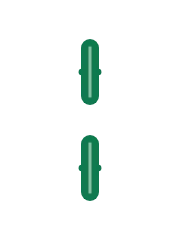
GapThe two-sided shape is the strongest. It waits for two different tiles, so it has up to eight copies to hit. By contrast, the edge and gap shapes each wait for one tile, so they have at most four copies. When you must break a shape, break the weaker one first.
Pairs matter too. You need exactly one pair to win. Two or three pairs early on are fine, because each can grow into a pong. However, too many pairs make the hand slow, since a pair needs an exact copy.
What to discard in mahjong
Early in the hand, throw away tiles that connect to nothing. Usually that means lone honour tiles that won't score for you. A single wind that is not your seat wind or the round wind is a common first discard. Next come lone 1s and 9s, because they can only join a run from one side.



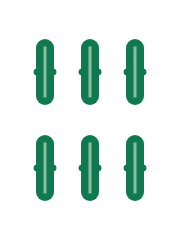
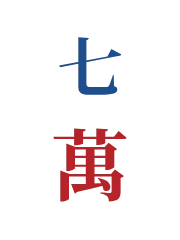




Keep dragon pairs for now. A dragon pong usually scores one tai, so it helps you reach the minimum. Similarly, keep a pair of your own seat wind.
Later in the hand, your choices change. Each discard now carries risk, because other players may be ready. At that point, safety matters more than shape. The next two sections show why.
Read the discards
Every discard tells a story. If a player throws many bamboo tiles early, they probably don't want bamboo. On the other hand, a player who throws no characters at all may be collecting them.
Claims tell you even more. An open pong or chow shows part of a hand for everyone to see. For example, two open dragon pongs warn you that the third dragon is dangerous. Also watch for a player who stops claiming and starts throwing tiles they just drew. Often that means their hand is ready.
Count the copies you can see. If three 6 Dots are already on the table, the fourth is the only one left. So a hand that waits on it is weak, and the tile is also safer to throw.
How to defend in mahjong
Defence is the half of mahjong strategy that most beginners skip. It means not giving away the winning tile. In the common Malaysian 4-player game, the player who throws it pays double. So avoiding one bad discard can save more points than a small win brings.
Safe tiles
Some tiles are safer than others. First, a tile that a player has already thrown away is safe against that player for the rest of the go-around. Singapore rules, which many Malaysian tables follow, stop a player from winning on a tile they discarded themselves until the go-around ends. Second, if a player passed on a tile, they can't claim the same tile from someone else in that go-around. Third, tiles with three copies already showing are hard to wait on.
Dangerous tiles
Some discards cost more than others. Many tables use pay-for-all rules, called 包 (bao). For instance, a player may show two dragon pongs. If your discard gives them the third, you may have to pay for everyone. The same can apply to the fourth wind set or a one-suit hand. So when a player shows these sets, hold the tiles they need.
Good defence also means knowing when to give up. If your hand is far from ready and a rival looks close, break your hand. Then throw only safe tiles until the hand ends.
Tai-aware play under Malaysian rules
In the 4-player game, most tables need at least one tai to win. Many also cap a hand at five tai. Because of the minimum, a fast hand with no tai can't win at all. So check where your tai will come from early. Dragon pongs, your seat wind, your seat flowers and each animal tile all count.
The limit matters too. Each extra tai doubles the payment, so three tai is worth four times one tai. Yet nothing above the limit adds more. As a result, once a hand reaches the limit, chasing extra tai only slows you down.
| Hand or element | Tai |
|---|---|
| Pong of any dragon | 1 |
| Each animal tile | 1 |
| All pongs | 2 |
| Half flush (one suit plus honours) | 2 |
| Full flush (one suit only) | 4 |
| Sequence hand with no flowers or animals | 4 |
Good mahjong strategy means choosing your target early. For example, a hand with many tiles of one suit may suit a half flush. Still, a flush takes time, and other players can read it from your discards. For full values, see our Malaysian mahjong scoring guide. The values above come from the Wikipedia article on Singaporean mahjong scoring.
Mahjong strategy for the 3-player game
The Malaysian 3-player game changes the plan. You need at least five fan to win, so slow, rich hands are normal. Above all, plan your fan from the start. Faces, animals, your own flowers and dragon pongs each give one fan.
The four Fly jokers shape the game too. Here are a few points to remember:
- A Fly can fill a chow or a pong. However, it can't go into a kong.
- Two Flies can act as your pair, so a spare Fly often makes a good pair later.
- Some tables give pong priority to a player without Fly tiles. So holding Flies may cost you a claim.
- Each Fly you hold also counts 50 points at the end in the common points system.
Since the set has only one suit, runs form easily, and so do waits. As a result, reading discards is quicker but also more important. Our Malaysian 3-player mahjong guide covers the full fan list, and the Sloperama 3-player notes give the original rules.
A simple practice plan
Strategy sticks best when you practise one habit at a time. Try this order over a few game nights:
- First, focus only on keeping two-sided shapes.
- Next, name your tai or fan source before each claim.
- Then, track one opponent's discards for a whole hand.
- Finally, practise folding a weak hand when a rival looks ready.
Keep our mahjong terms glossary handy for the words your table uses. With time, good mahjong strategy becomes habit.
Frequently asked questions
What is the best mahjong strategy for beginners?
Keep tiles that can finish in more than one way, such as two tiles in a row. Throw lone winds and end tiles first, unless they score for you. Then watch what others discard. These three habits give beginners the biggest gain.
Which tile should I discard first?
Start with a lone honour tile that won't score for you, such as a wind that is not your seat wind. Next, throw lone 1s and 9s. Keep dragon pairs and your seat wind, because they can give you tai.
What is a safe tile in mahjong?
A tile is safest against a player who has already thrown the same tile in that go-around. Under common Singapore-style rules, they can't win on it. Tiles with three copies already showing are also fairly safe, because few players can wait on them.
Is mahjong more luck or skill?
Both. Luck decides single hands, because you can't choose your draws. Skill shows over many hands. Players who discard carefully and defend well lose fewer big hands. So good mahjong strategy gives steadier results across an evening, even when the tiles run cold.
Should I always go for big hands?
No. A big hand is slow and easy to read. Usually it is better to win small hands that meet the minimum. Go for a big hand only when your starting tiles already lean that way. Also keep the table limit in mind.