

This mahjong FAQ answers the questions Malaysians ask most, from tile counts and house rules to the law and online play. Also, each answer is short and self-contained. When you want more detail, follow the link to the full guide.
We group the questions by topic. So jump to the section you need from the contents list, or read this mahjong FAQ from top to bottom.

Mahjong FAQ: the basics
New to the game? Then start with these three mahjong FAQ answers. Then read our step-by-step guide on how to play mahjong.
What is mahjong?
Mahjong is a tile game that developed in southern China in the mid-1800s, near the end of the Qing dynasty. Usually, four players take part. Each player starts with 13 tiles, draws and discards in turn, and tries to build a 14-tile hand of four sets and a pair. In Malaysia, people play it at home, in cafés and in community centres.
How many tiles are in a mahjong set?
A standard Chinese set has 144 tiles: 108 suited tiles, 28 honours and 8 flowers and seasons. The Malaysian and Singapore 4-player set adds 4 animal tiles, for 148. The Malaysian 3-player game uses only 84 tiles: the dots suit, honours, bonus tiles, 4 face tiles and 4 fly jokers.
Can mahjong be played with 2 players?
The standard rules are written for four players. Malaysia also has a well-known 3-player game that uses 84 tiles. However, we found no reliable source for an agreed 2-player rule set, so we do not publish one. If only two of you are free, you can still practise building hands and reading discards together.
Malaysian rules
This part of the mahjong FAQ covers what makes local tables different. Malaysian tables add animals, jokers and their own scoring habits. Our guide to Malaysian mahjong rules covers each one in full.
What makes Malaysian mahjong different?
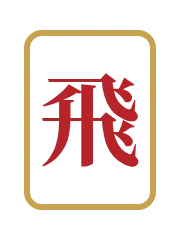
Malaysian 4-player mahjong uses 148 tiles, including four animal tiles: cat, rat, rooster and centipede. Many tables pay an instant reward for animal pairs. Malaysia also has a 3-player game with 84 tiles and fly (飛) jokers. Scoring uses tai, where each tai doubles the payment. Even so, house rules vary from table to table.
What is tai in mahjong?
Tai is the unit of hand value in Malaysian and Singapore mahjong. Each tai doubles the payment, so a 3-tai hand pays four times a 1-tai hand. Many tables set a minimum of 1 tai to win, but house rules vary. Many home games settle in money. On this site we use points, and the legal section below explains why that matters.
How does Malaysian 3-player mahjong work?
The 3-player game drops the bamboo and character suits and keeps only dots, honours and bonus tiles. It adds 4 face tiles and 4 fly jokers, for 84 tiles in total. A fly can stand in for a tile in a chow or pong, but not in a kong. All sources that cover it allow chow, but some details vary by table.
Buying sets and tables
This mahjong FAQ gives quick prices only. For full price tables, see our guides to the mahjong set in Malaysia and the automatic mahjong table.
How much does mahjong equipment cost in Malaysia?
As of October 2026, travel sets on Shopee cost about RM26 to RM67, and full-size 144-tile sets cost about RM275 to RM530. Manual folding tables from Malaysian shops cost RM183.88 to RM411.43. New automatic tables from Malaysian retailers cost about RM1,700 to RM2,900. Prices change often, so check the date on any listing.
Where can I buy a mahjong set in Malaysia?
Most people buy on Shopee and Lazada. For a shop, try Tekkashop in KL, Liang Yew Mahjong Centre in George Town, Penang, or Flying Desk in Johor Bahru. Our mahjong shop Malaysia guide lists verified sellers by state, with prices we saw in October 2026.
Is mahjong legal in Malaysia?
Mahjong itself is a popular social game of skill and chance. Families play it at home, and some clubs meet to play without any gambling. So the legal question is about money, not the tiles.
What the law says
The main law is the Common Gaming Houses Act 1953 (Act 289). Section 2 defines "gaming" as "the playing of any game of chance, or of mixed chance and skill, for money or money's worth". You can find the Act on the official Laws of Malaysia portal.
Under section 6(1), gaming in a common gaming house can lead to a fine of up to RM5,000, up to six months' jail, or both. News reports give the same maximum for gaming in public under section 7(2). Running a common gaming house carries heavier penalties.
How police enforce it
Police run an anti-gambling operation, Op Limau, around Chinese New Year. In 2023, more than 900 people were arrested nationwide, according to Free Malaysia Today. Reported mahjong raids cite stakes, chips or cash. In one Sibu raid in 2021, for example, police seized 280 tiles and 100 chips.
Playing without stakes
Read plainly, the definition covers play "for money or money's worth". So by that wording, mahjong played purely for fun, with no stakes, is not "gaming" under the Act. This is a reading of the definition, not a legal opinion. We found no police or lawyer statement on mahjong itself.
Muslims are also subject to syariah gambling offences. In the Federal Territories, for example, the syariah law sets a fine of up to RM3,000, up to two years' jail, or both.
This is general information, not legal advice. Laws and enforcement can change. If you have a question about your own situation, consult a lawyer.
Is mahjong illegal in Malaysia?
Mahjong itself is not banned. It is a popular social game. However, the Common Gaming Houses Act 1953 makes "gaming" an offence in a common gaming house or in public. The Act defines gaming as playing a game of chance, or of mixed chance and skill, for money or money's worth. This is general information, not legal advice.
Is mahjong gambling?
Not by itself. Mahjong is a game of mixed chance and skill, and many people play it just for fun. It becomes "gaming" under Malaysian law when people play for money or money's worth. So the stakes, not the tiles, make the difference. Reported police raids involving mahjong cite stakes, chips or cash.
Can Muslims play mahjong in Malaysia?
Muslims are subject to syariah gambling offences as well as civil law. For example, the Federal Territories syariah law covers a Muslim who gambles or is found in a gaming house. We found no fatwa about mahjong itself. In 2021, the Federal Territory Mufti Office said card games without gambling are permissible, but still advised avoiding them.
Online and apps
Many Malaysians first meet the game on a phone. So this mahjong FAQ section covers online play and apps before you download.
Can I play Malaysian mahjong online?
Yes. App stores list several apps that follow Malaysian-style 3-player rules. However, each app sets its own rules. For example, one Singapore 3-player app uses a scoring scale that differs from the common 10-fan cap. So treat an app as practice, and agree house rules separately when you play at a real table.
Do mahjong apps pay real money?
Be careful with any app that promises real money. In October 2023, Malaysia's Court of Appeal ruled that online gambling is an offence under the Common Gaming Houses Act in Peninsular Malaysia. So an app that takes stakes and pays cash can carry legal risk. Free apps that use only points or coins are a safer way to practise.
Is mahjong solitaire the same game?
No. Mahjong solitaire is a different game for one player. It uses mahjong tiles, but you simply match pairs of free tiles to clear a layout. It has no hands, no discards and no scoring in tai. So skill at mahjong solitaire does not carry over much to the 4-player or 3-player table game.
Culture
Finally, this mahjong FAQ ends with culture. Mahjong is part of family life for many Malaysians. Our guide to mahjong etiquette covers table manners and superstitions in more depth.
Why is mahjong popular at Chinese New Year?
Chinese New Year brings families together, and mahjong fits a long day of visiting. In 2012, The Star described CNY in Malaysia as a time for family reunions, lion dances, firecrackers, mahjong, mandarin oranges and ang pow. Mahjong is also played in homes, cafés and community centres all year round.
What are common mahjong superstitions?
Many players keep books away from the table, because the Chinese word for "book" (書) sounds like "lose" (輸). Some believe that tapping a player's shoulder brings them bad luck. Others think a trip to wash your hands can change your luck. These are folk beliefs, and every table has its own.